Chenglong Wang
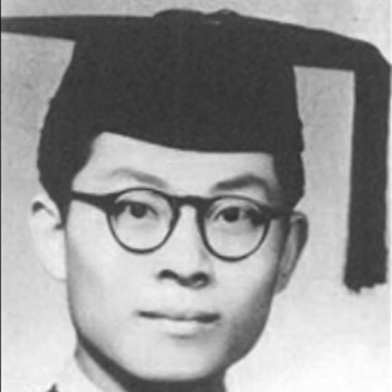
|
Quantitative Algorithm Engineer, Ubiquant Investment Co., Ltd., Beijing, China Research interests: quantitative finance, reinforcement learning, imperfect-information games, speech anti-spoofing, and computational imaging M.S. in Computer Science, University of Chinese Academy of Sciences E-mail: jackiewangchenglong@gmail.com |
Biography
I am a quantitative algorithm engineer with a background spanning physics, computer science, reinforcement learning, imperfect-information games, and quantitative finance. My recent work focuses on alpha modeling, option pricing, and data-driven execution strategies for Chinese financial markets. Before joining Ubiquant Investment, I studied at the University of Chinese Academy of Sciences and Xi'an Jiaotong University, and worked on game AI, dialogue systems, speech anti-spoofing, and computer vision research at CAS, Alibaba, and SenseTime Research.
Education
University of Chinese Academy of Sciences (2019 – 2022)
M.S. in Computer Science, Exam-Free Postgraduate Recommendation
Thesis: Adaptive Doudizhu Algorithm Based on Deep Monte Carlo and Simulated Annealing.
Xi'an Jiaotong University, Qian Xuesen Honors College (2015 – 2019)
B.S. in Physics, minor in Mathematics
Young Gifted Program. GPA: 88.62/100, First-Class Honors.
University of Science and Technology of China (2017 – 2018)
Visiting Studentship
Research in the Key Laboratory for Quantum Optics and Fine Mechanics, Chinese Academy of Sciences.
Work Experience & Internships
Ubiquant Investment Co., Ltd. (2022 – Present)
Quantitative Algorithm Engineer
Built multi-factor alpha pipelines that combine 200+ engineered features with Graph Attention Network embeddings for 4,000+ A-share stocks.
Applied convex optimization and Lagrange multiplier techniques to portfolio construction under transaction cost penalties and position constraints.
Developed a Monte Carlo engine for Asian option pricing with variance-reduction techniques, reducing pricing error by 22% versus a Black-Scholes benchmark.
Designed PPO, SAC, and offline Decision Transformer workflows for intraday futures execution, improving risk-adjusted PnL and reducing slippage and transaction costs.
Alibaba Group, Taobao BU (May 2021 – Sep. 2021)
Intern, Automated Dialogue Systems
Designed a knowledge-base-augmented response framework combining TF-IDF, BM25, and BERT-based semantic matching.
Improved system accuracy by 23% over rule-based baselines and supported deployment at Taobao customer-service scale.
Contributed to the work later granted Chinese invention patent CN 110019715 B.
SenseTime Research (Jul. 2019 – Feb. 2020)
Intern, Computer Vision Research
Proposed incremental hint learning for compressed face-recognition models to reduce out-of-distribution degradation.
Supported a team that later reached the top position in ICCV 2021 MFR and the NIST FRVT leaderboard.
Research Experience
Institute of Automation, Chinese Academy of Sciences (2020 – 2022)
Advised by Prof. Junliang Xing
Studied imperfect-information games and approximate Nash equilibrium methods for Doudizhu.
Integrated simulated annealing with counterfactual regret minimization to improve regret-value convergence.
Combined Deep Monte Carlo, residual networks, prioritized sampling, and multi-agent learning to achieve championship-level gameplay.
Participated in an audio deepfake detection project at the National Laboratory of Pattern Recognition, extending my work into speech anti-spoofing and temporal-frequency attention modeling.
Extended the framework toward adversarial team decentralized partially observable stochastic games, with ongoing manuscript preparation.
Key Laboratory for Quantum Optics and Fine Mechanics, CAS (2017 – 2020)
Advised by Prof. Wenlin Gong
Worked on computational ghost imaging, sparsity-constrained reconstruction, and super-resolution imaging under unstable illumination.
Developed algorithms for color ghost imaging and real-time correction of energy fluctuation effects.
State Key Laboratory of Multiphase Flow in Power Engineering, XJTU (2015 – 2017)
Advised by Prof. Guanghui Su
Performed coupled FEM/FDM simulations for heat-pipe startup and thermal safety analysis in reactor systems.
Validated startup dynamics with Cotter's limit theory for space-reactor thermal radiator applications.
Selected Projects
Audio Deepfake Detection (2020 – 2021)
National Laboratory of Pattern Recognition, Institute of Automation, CAS
Worked on speech anti-spoofing and forged-audio detection with a global and temporal-frequency attention network tailored to spectrogram-like feature maps.
Designed two parallel attention modules: one for temporal-frequency aggregation and one for global channel-level reweighting inspired by SE-Net.
Validated the model on the ASVspoof2019 LA benchmark, where the best single-model result reached 4.12% EER.
Related paper: Global and Temporal-Frequency Attention Based Network in Audio Deepfake Detection / 基于全局-时频注意力网络的语音伪造检测.
Selected Publications
Wang Chenglong, Yi Jiangyan, Tao Jianhua, Ma Haoxin, Tian Zhengkun, Fu Ruibo. Global and Temporal-Frequency Attention Based Network in Audio Deepfake Detection / 基于全局-时频注意力网络的语音伪造检测. Journal of Computer Research and Development, 2021, 58(7): 1466-1475.
F. Wang, C. Wang, M. Chen, W. Gong, Y. Zhang, S. Han, G. Situ. Far-field super-resolution ghost imaging with a deep neural network constraint. Light: Science & Applications, 2022, 11(1).
F. Wang, C. Wang, C. Deng, S. Han, G. Situ. Single-pixel imaging using physics enhanced deep learning. Photonics Research, 2022, 10(1): 104-110.
C. Wang, W. Gong, et al. "Influence of Receiving Numerical Aperture and Rough Target Size on Ghost Imaging via Sparsity Constraint." Chinese Laser, 2019.
P. Wang, L. Wei, C. Wang, et al. "Super-resolution imaging via sparsity constraint and sparse speckle illumination." Chinese Physics B, 2018.
P. Wang, C. Wang, et al. "Color ghost imaging via sparsity constraint and non-local self-similarity." Chinese Optics Letters, 2021.
X. Mei, C. Wang, et al. "Influence of the source's energy fluctuation on computational ghost imaging and effective correction approaches." Chinese Optics Letters, 2020.
Wang Chenglong, Hu Lingwen, Qiu Suizheng, Su Guanghui, et al. "Uncertainty Analysis of Transportable Fluoride-Salt-Cooled High Temperature Reactor (TFHR)." Nuclear Power Engineering, 2017.
Zhang Wenwen, Wang Chenglong, et al. "Thermal Safety Analysis of New Type Heat Pipe Reactor Core." Atomic Energy Science and Technology, 2017.
Honors & Awards
Second Prize, Chinese Physics Olympiad (2015)
First Prize, China Undergraduate Physics Tournament (2016)
First Prize, Mathematics Competition of Chinese College Students (2016)
First Prize, China Undergraduate Mathematical Contest in Modeling (2017)
National Scholarship, Xi'an Jiaotong University (2019)
Champion, China Computer Game Championship in Doudizhu & Mahjong (2022)
Outstanding Master's Thesis (2022)
Contact Information
E-mail: jackiewangchenglong@gmail.com
GitHub: github.com/clwang1998
Current focus: quant research, RL for trading, and game-theoretic decision systems.